

Revisiting The Available Parent

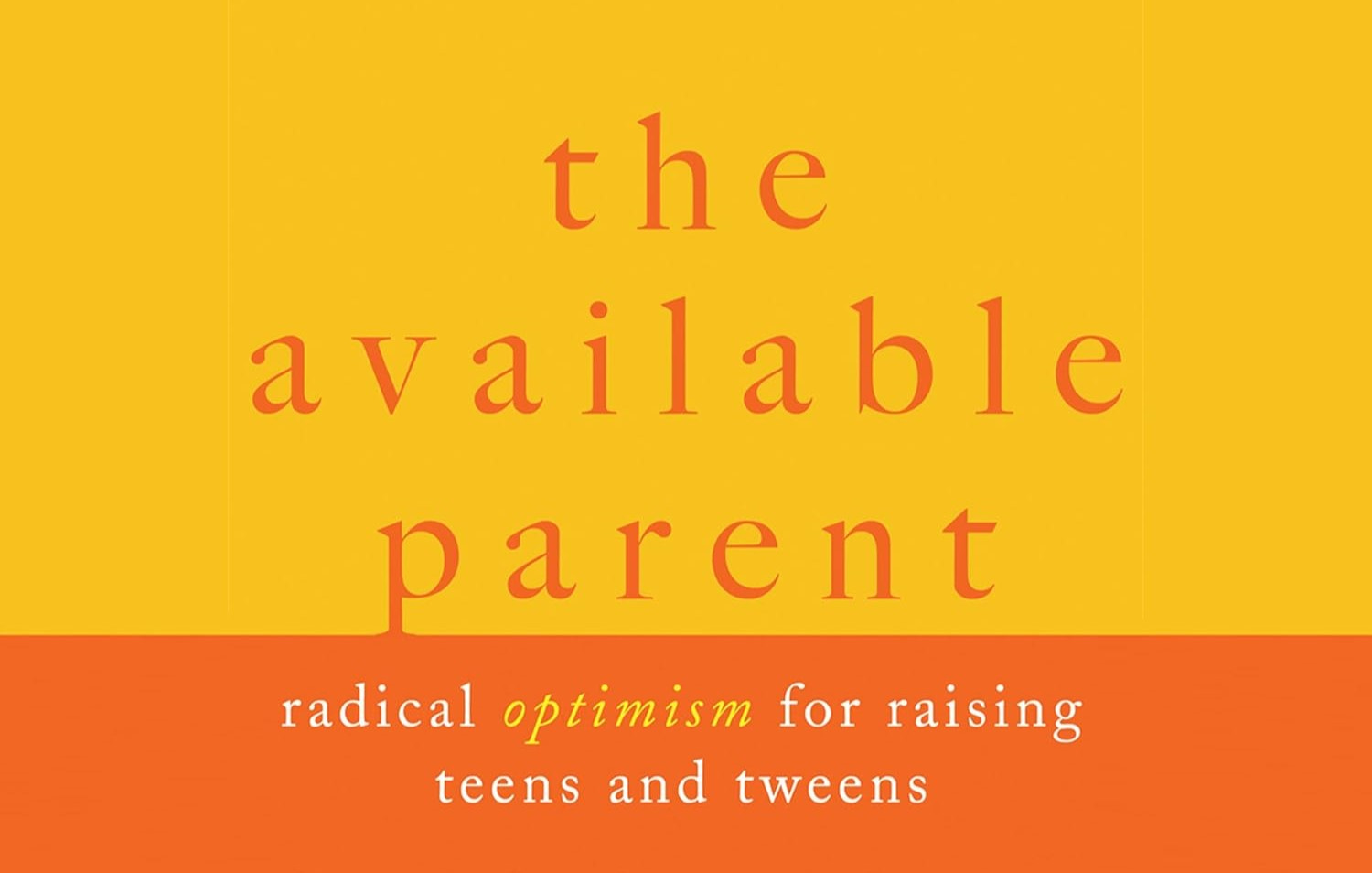
“Don’t get me wrong, John. I’ve read all your books, and they’re very good. But “The Available Parent” will always be my favorite. When I’m lost as a parent in any way, when I’m not sure exactly what to do in a given situation, I think about the ways in which I can best be available to my children.”
- Mom of two teenagers and one twenty-something, Wednesday
In an effort to avoid the headlines, I found myself recently pondering this quote about my first book. It seems appropriate to revisit the core concepts presented in it now. As for the headlines, please, please just treat people better, more humanely, all the people, all the time. Could that ever be a bad idea?
Alright, moving on.
So when I started this career decades ago, I never intended to write books or appear in media segments or any of this bonus stuff. My goal was to help people in the room one-on-one or two-on-two. It wasn’t until I found myself repeating certain themes to parents over and over again that I thought I had a message that I should share more broadly. So, half a career ago, I wrote this first book The Available Parent.
Fun fact: Steve Harvey held up a copy on his show for about three seconds, and it went to number one on Amazon before plummeting right back to where it was, somewhere around 250,000 in Books, all within a day. Another fun fact: it’s still available on Amazon, and I’ll bet it’s a steal!
I wrote this book back then in part because I realized what a rip-off parenting young people could be. It was apparent to me that I myself had this luxury of talking in-depth with the very best of so many kids, their most brilliant, thoughtful, funny, creative, empathic selves, hour after hour every week. And I think I was often talking to people their parents had never even met. In any event, I thought it might be useful to revisit this concept of the available parent here, in today’s far more complicated context of parenting.
First, a quick definition: the way I looked at availability in parenting back then, three things were required. For a parent to be truly available the vast majority of the time (none of us is perfect, after all), they needed to be self-aware, and do their best to parent free of their own fear, their own judgment, and their own ego.
I would urge you to pause for just a second here, and really take that list in. Because I was asking a lot of parents fifteen years ago. And I’m writing now because I think availability in parenting has never been more important, nor has it been more complicated and difficult. So, let’s break this down and update it for the present day.
Fear
Parenting a middle schooler, a teenager, or even a twenty-something is almost by definition a frightening enterprise these days. I mean, parenting today is truly freakin’ scary, right.
Our kids are exposed to things that we were never privy to when we were their age, many dynamic, stealth, life-affecting elements and influences that didn’t even exist back then.
I included a chapter on social media in that book, for example, but it was about Facebook and that’s about it. A parent could stopgap their concerns about the whole thing by force-friending their kid, holding onto their passwords, and keeping track of what they posted, who they befriended and other online behavior. As scary as that universe was then, it feels quaint from where we sit now, right? Nice and contained.
Now, we’ve got so many iterations of social media, many of which we don’t even remotely understand. If you know how Snapchat works specifically, for instance, you are a very rare parent. If you can understand the connections that some kids make between YouTube videos and TikToks to violence on the dark web to straight up pornography, you are a rare, rare parent. By and large, we are often in the dark in these areas of our kids’ lives that really impact them.
And of course, it’s not just social media. It’s all the media our kids take in. When I first wrote The Available Parent, there were no podcasts, for instance. Now, podcasts exert so much influence in the lives of our kids that they often shape components of their identities and thought processes, sometimes unbeknownst to that very child who’s listening. I’ve worked with many boys, for instance, who have been all but radicalized by the prolific mindsets of certain podcasters. And you might know very little about what your kids are listening to between those AirPods moment-to-moment and day-to-day.
It’s downright disorienting.
Add to that the drug culture that has evolved so rapidly and confusingly over the past decade or so. What are kids vaping? Is it THC? CBD? Nicotine? Tobacco? What are the gummies all about? What is my kid ingesting? Is fentanyl a legitimate danger I should be concerned about, and if so, what can I do about it?
And, as one Mom asked me recently, “Is alcohol just over, or are we still worried about it?”
Then there’s the issue of sex and relationships, one that used to really strike fear in the heart of parents. The idea of engaging in the sex talk with your kid was an ominous project back in the day. Now, I work with parents who are concerned that their kid might not be having sex, or experiencing any intimacy, often or early enough. They’re troubled by the possibility that the lack of connection now may be an ominous foretelling of their life in the future. Will they have a person, or people? Will they be social? If they’re alone and isolated, will they turn that upset inward and hurt themselves? Or outward, and hurt others?
These are big, big questions and issues we do not want to be in the dark about.
And finally, a lot of parents are afraid of the nature of the current political climate their kids have grown up within, the divisive and vitriolic speech they’ve had access to from very, very early ages. This is as bad as it’s been politically, and our kids can’t recall more respectful, cooperative, kinder and inclusive times. Can we possibly mitigate all that ugliness?
I’ve learned from parents that TV shows like Euphoria or Adolescence compound this fear that we know very little about the lives our children are leading on their screens or behind closed doors.
The broad point here is something I’ve written about in the space many times before. You are the first generation of parents that has to learn what it’s like to be a young person from your young people. And that’s a scary prospect. They may not be fully disclosing. There will be things you aren’t privy to, that you just won’t know. Your inclination might be to track, to snoop, to attach AirTags to virtually everything, from backpacks to shoes, keys, and wallets.
But even then, you must know you can’t keep up. When it comes to any kind of technology, fundamentally, we know our kids are a good ten steps in front of us.
So what do we do? We learn from them. We ask them how these things work. We really listen to them. We ask them how they feel about virtually every unknown in their lives. We attend to the balance in the Emotional Bank Account we hold with our child, and ensure a lot of positive interactions punctuate our time together, so that we are that much more likely to have their ear when we need them to listen.
And we trust our parenting. We remember that we didn’t just meet these people. We’ve been parenting them their entire lives. We don’t need to be cagey with them. We can let it be known, overtly, that should anything go sideways in their lives, you are available for them.
Fear is potent, fear around parenting particularly so. In retrospect, judgment and ego could probably have been subsumed beneath fear. So it’s crucially important that, if nothing else, you attend to your level of fear when talking with, and especially intervening with, your child.
Judgment
Way back then and today, I find that fear and judgment are closely tied together in families. As parents, we are so very afraid for our children, that they might make a life altering mistake, that they may encounter unnecessary emotional pain, that they might struggle more than we want them to. Not knowing exactly what to do with that fear, it often comes out as judgment toward that child.
So many kids have told me that, sometime around the onset of adolescence, their parents changed the way they presented to them:
“My parents, they used to be so cool, so chill. We used to have a blast together. We would listen to music together, we would laugh together, we would play games together. Now, they feel like the Gestapo to me. Like they’re policing me. Looking for something I’m doing wrong. So, I just avoid them to dodge consequences and lectures.”
This sentiment has only amplified among the kids I work with over the years. And I suspect, if you are the parent of a teenager, you can sense that growing gap. You may well mourn the child you once had, or your connection to that child. And I want to tell you, without irony or patronizing, that this crucial connection is still available to you.
Disconnection and conflict are not requisite in order for your child to navigate adolescence successfully. That is a dangerous and unnecessary myth. Please read that again.
Quite the contrary, working through adolescence is most successful as a group project. This is where it’s important that you be emotionally available and non-judgmental. You don’t need to coddle. You don’t need to do the things for your child. You cannot navigate the breakup for them. You cannot write the paper, and I urge you not to reach out to the teacher or the professor. Let your child be in charge, and learn her competence and resilience by managing, or even mismanaging and learning from, these issues herself. But you can be the trusted advisor your child needs.
However, if you are constantly, or even frequently, judging your child for what she does, or who she is, you will lose your connection with her. Along with that, you’ll also lose any leverage you may have carried to be that trusted advisor. After all, would you turn to and trust someone who judged you harshly?
One thing I know I failed to emphasize enough when I first wrote The Available Parent is that a significant part of the reason your child cannot carry your judgment is that he already carries his own heavy burden of self-judgment all the time. He may not show this to you, but I can assure you I’ve heard this from enough teenagers to be absolutely certain that it’s true. To him, everything he says or does is cringe-y. He judges himself for his looks, his lack of social grace, his stupidity when talking to someone he’s attracted to, his inability to get started on his work. So doubling down on judgment of behavior, or misbehavior, grades, weight, friends, musical preferences, or most any other aspect of your child’s life is pure folly at best, and will make you feel that much more ineffective as a parent at its worst.
Ego
I think it’s difficult to sense when your ego is at play in any area of life, especially parenting. The ego can be stealth and tricky, and sometimes it’s hard to tell when it’s leading you astray. But think of it this way: if you are pressing your child to perform in a certain way, or to succeed through some narrow, inflexible, ill-defined criteria, you’re probably parenting, at least to some extent, from a place of ego.
I’ll bet you can think of a kid in your world who lives under the burden of parental ego. When I think of parental ego run amuck, I think abundant yard signs and bumper stickers. I think about those parents who over-brag about their kids’ successes at school pickup, dinner parties and fundraisers, as if they are describing feats they’ve achieved on their own. Ego-fueled vibes are distinctly different than being proud of your child. It’s about being proud of your child only under certain prescribed circumstances, circumstances pre-approved by a parent.
Now in fairness, we all go through it, some degree of ego in our parenting. I liken it to social media. Somewhere deep in our brains, we get a little dopamine kick from a post that make our lives look thrilling or glamorous or better than someone else’s. We respond bodily seeing that uptick and followers and likes. When it involves our kids, that dopamine hit may feel even stronger.
But if your parenting is about you, if you’re trying to create a mini-me, or drive some correction for mistakes you made during your own adolescence, I strongly urge you to get all of that in check. And listen, I am well aware that this is not easy to do. This is a mighty ask of a parent. Not every parent can get that ego in check alone. Because ego is clever, and sneaks in the gaps between thoughts quite readily. Be willing to seek help from a professional if you feel like ego plays a big role in your own parenting. Trust me, it helps.
It’s in this particularly dangerous space, that ego-filled region of your mind, where you can so easily miss what’s remarkable about your child. You may be focusing on a poor math grade, but missing the prolific artist. You may be fuming about a missed curfew, but not fully clocking a boundless, lively spirit.
I write a lot about how uninspired so many of our kids are today, how many of them are not eager to continue with their lives. Even if they are not overtly suicidal. This may not be easy to hear or fully understand, but it’s true.
And here’s what I honestly believe: if we as parents can put our egos aside, we can find space in our minds to celebrate the people our kids are becoming, without agenda. This is one of my favorite aspects of parenting, walking alongside someone who’s in the process of becoming. And how uninteresting would life be if it were predictable, known. No, it’s way more awe-inspiring to be available to someone with their own skills and interests and wishes and desires. It may be the best part of this whole parenting gig. It’s a big deal. It may be the light that makes your child want to live their life.
The upshot
If you can hold your fear and your judgment and your ego at bay the vast majority of the time, the odds of your child successfully navigating the rough waters of adolescence increase exponentially. I know this for a fact. I’ve witnessed it hundreds upon hundreds of times. You can lean on this as a fundamental truth.
Here’s the caution. If you lead with fear or judgment or ego or all three, you effectively lose your child. If they need a guide or a consultant, they are not likely to turn to you. They are far more apt to turn to another teenager, someone who may be willing, but may also be ill-equipped to help, in terms of experience, maturity or development. Or worse, they’ll turn to some stranger online, or a podcaster, or Reddit, all poorly set up to be good stewards of your child’s well-being.
The far better story is that you be that person, that trusted, available consultant.
And here’s the good news. Availability is how you stay connected to your child all the way through. When I first wrote this book, my son was in the middle of his adolescence. Back then, I would speak about how it felt like we were connected because I was available to him on a regular basis. I worked hard to keep my fear and judgment and ego at bay.
I haven’t been a perfect parent, but I have worked hard on that.
Fifteen years later, I can offer you an honest postmortem. My son George and I are effectively best friends. I turn to him now as a grown man as often as he turns to me. We have been to concerts together. We double-date. We run races, including a marathon, together. We laugh and play and work our shit out together. He asked me to officiate his wedding earlier this year, for crying out loud. Honestly the honor of my life.
And truthfully, without availability, I don’t think any of this would’ve happened. We might still be kind of close. He would probably show up for holidays. But he might also be doing so out of obligation. I bet some of you do that. I know I did. Now, I know we want to be together. We are now available to each other, and it’s amazing.
So be the available parent. It is the very best story you can ever possibly write for your family. And fair warning: if you keep reading my Substack, you’re going to get really tired of that word.
Available.
Because available parenting is back, baby!